
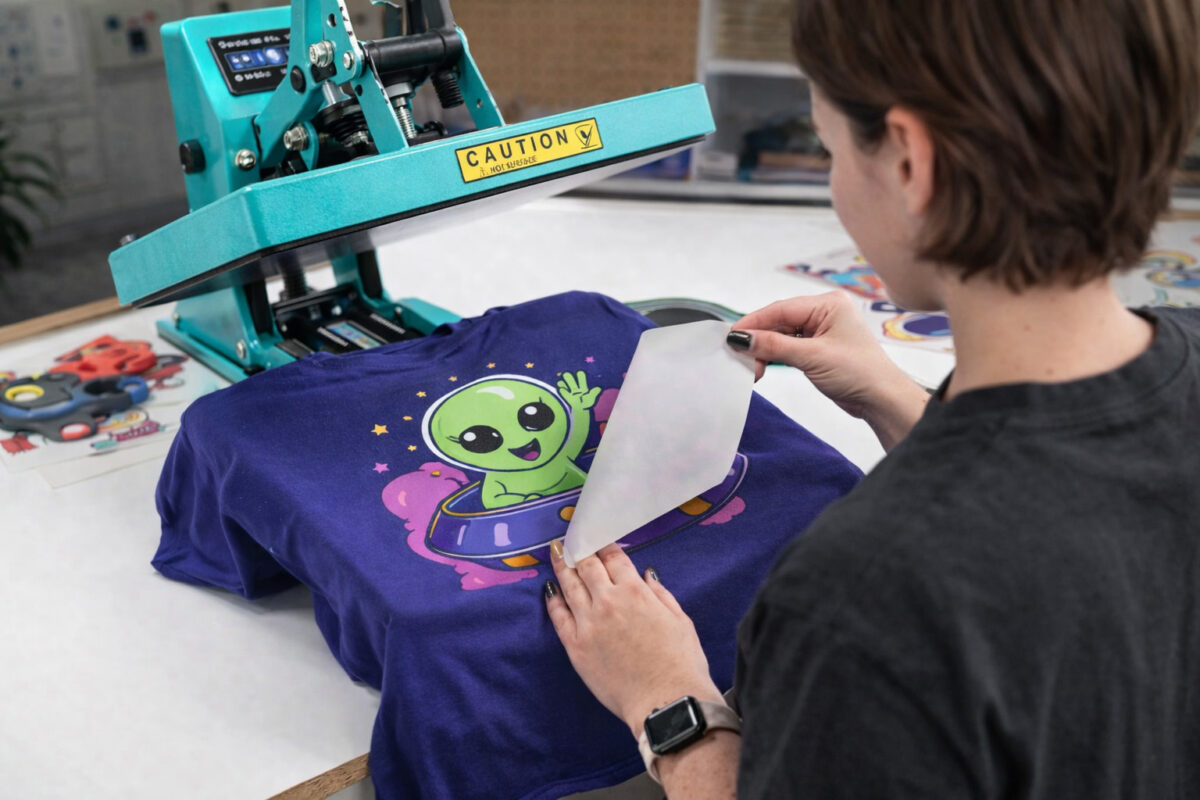
How to Heat Press DTF Transfers: A Simple Step-by-Step Guide
Getting Professional Results with DTF Heat Pressing
Proper heat application is what turns a DTF transfer into a bold, long-lasting print. When temperature, pressure, and timing are dialed in correctly, the result is vibrant color, clean edges, and excellent durability. Use the steps below to achieve consistent, professional-quality results every time.
What You’ll Need
- A heat press (pneumatic, electric, or manual). Household irons can work in a pinch but are far less reliable.
- DTF transfers
- The garment you’re pressing
- Teflon sheet or parchment paper (optional, but recommended)
Step 1: Prepare the Heat Press
Set your heat press to 315–335°F. This temperature range works well for most cotton and polyester garments, creating strong adhesion without scorching fabric or degrading the print. Specialty materials may require small adjustments to heat, pressure, or press time.
Step 2: Initial Press
- Lay the garment flat on the platen and position the DTF transfer in the desired location.
- Apply pressure:
- Pneumatic press: 70–80 PSI
- Electric press: Pressure level 4
- Manual press: Firm, even pressure
- Press for 6–12 seconds. This initial press activates the adhesive and bonds the transfer to the fabric.
Step 3: Peel the Film
Once the press opens, peel the film immediately while it’s still hot. Hot peeling typically produces sharp edges and a smooth surface. Always follow the specific peel instructions provided with your transfer if they differ.
Step 4: Final Press for Added Durability
Place a Teflon sheet or parchment paper over the design and press again at 315–325°F for 6–12 seconds. This finishing press helps flatten the print, improve wash resistance, and lock the ink securely into the fabric.
Step 5: Cool and Inspect
Remove the garment from the press and allow it to cool completely. Once cooled, the transfer is fully set and ready to wear, with a clean, professional appearance.
Tips for Reliable Results
- Check pressure consistency: Uneven pressure can lead to incomplete adhesion.
- Use high-quality transfers: Premium films and inks produce better color and longer-lasting prints.
- Test unfamiliar garments: Always do a quick test press when working with new fabrics.
Final Thoughts
Successful DTF heat pressing comes down to repeatable settings and good technique. Stick to proven temperature and pressure ranges, make small adjustments as needed, and test regularly. With consistency and practice, your DTF prints will stay vibrant, smooth, and durable wash after wash.